How lucky I am; lucky to be able to listen and learn from global business and political leaders first hand. I’ve heard Colin Powell, Former Secretary of State, Donald Feinstein, Reagan’s Chief Economic Advisor and today Matt Simmons of Simmons & Company International, a leading investment banking firm focused on the energy industry.
Mr. Simmons is considered the 'high priest' of peak oil, is a member of the Council on Foreign Affairs and has written many books on the subject. His views are very provocative. For example, he suggested 500 – 700 might be the fair price for a barrel of oil. Now that’s provocative given oil is at $39 per barrel this week and down more than 70% in the last six months. Why? Because 90% of global oil rigs are 29 years old and will require trillions to repair and replace over the coming decades. Here is his presentation on surviving the post oil peak.
Speaking extemporaneously from notes, Mr. Simmons addressed the250 participants of the 2009 Oracle Oil & Gas Summit in Houston. His presentation covered many subjects from the ‘Rust’ issue and asset aging issue to the poor cost estimation of exploration to the aging workforce. With kids not far from college, the last point caught my interest.
I am very aware of the aging US workforce and I’m sure if I attended a healthcare conference or a manufacturing conference I would hear the same remarks – the high volume of baby boomers retiring will leave a huge talent vacuum and put America in a difficult economic situation. The Oil & Gas and Energy industries problem is more severe than others. Oil & Gas is the largest single industry on the planet and ²/з of their workforce is planning to retire in the next 5 years. Their geophysicists and thermal engineers average age is 59. American universities are not producing nearly the replacement power of the older generation.
Every industry goes through peaks and valleys on talent. In the 1980’s there was a strong demand for more accountants. In the 90’s we were paying web developers $150,000 to write HTML code. The 2000’s were all about financial engineering and Wall Street was enticing all the best and the brightest from American universities. Each generation has its unique talent needs and some important US industries are getting left behind. Unfortunately, countries like China and India have a very different demographic makeup and they are prepared to fill this global shortage.
What kind of engineers does America need? Engineers to invent clean energy, engineers to figure out more efficient ways to produce oil, engineers to reduce carbon emissions. You name it, we need more engineers. I can’t believe I’m saying that. I predict pocket protectors will be in vogue in 2020. What is a major twist on the needs of engineers for the future is they need to deeply understand their scientific field and understand business/finance. Mr. Simmons iterated this point many times.
When posed the question about alternative energy, Mr. Simmons spoke eloquently about how little green energy contributes to the increasing global demand for energy. This wasn’t new information but here’s what he said. “Globally, oil usage is 85 million barrels per day. At best, clean tech energy sources can (in the future) produce the equivalent of 7,000 barrels per day. That's less that 1/10 of 1%. This would include wind, geothermal, ethanol and nuclear combined.” Personally he believes offshore wind generation has great potential and this is why he sponsored a project off the coast of Maine to explore.
Mr. Simmons perspective on what to do was commonsense. He believes energy conservation is critical to sustaining this global crisis. He believes we need to travel less and consume goods made closer to home. He believes the 230 million US passenger fleet will not be replaced over night and likely not in the next 30-50 years. On the future of battery technology he flippantly said the best we can do is double the lifespan of laptop batteries. Funny but expected from an Oil man.
With kids less than 10 years from entering the workforce, his message really struck home. My hope for Parker and Hunter is that they learn about the different facets of science and that one field or another sparks their interest. I’m not convinced high school ‘guidance counselors’ have a clue about how to channel interests into careers. We haven’t begun this process with Parker yet and I hope I’m wrong on this topic.
In the coming years ahead, the most we can do at this stage of their lives is to expose them to many different professions (particularly those in strong demand) and let fate take its course. Fortunately I’ve developed great professional and personal relationships with leaders in many industries and they’re a phone call away from visiting their shop and discussing their profession. Many would be delighted to talk to young people about their work.
Now more than ever before, high school students need to think more about their interests and careers as the global market for talent is extremely competitive and there are serious imbalances among professions and industries.
Showing posts with label PARKER. Show all posts
Showing posts with label PARKER. Show all posts
Wednesday, April 22, 2009

Sunday, February 22, 2009
Shooting Rifles
 Last week I took Parker and two friends to the rifle range. Parker is hooked on shooting and he’s quite good. OK, he's sitting on a stationary bench with a 20 power rifle scope but still it requires skill to consistently put holes on the paper. We’ve enjoyed taking Trevor and Jeremy and their dad, Robert trap shooting but this was the first time they went to a rifle range. Jeremy had experience shooting 22’s but nothing much bigger than that.
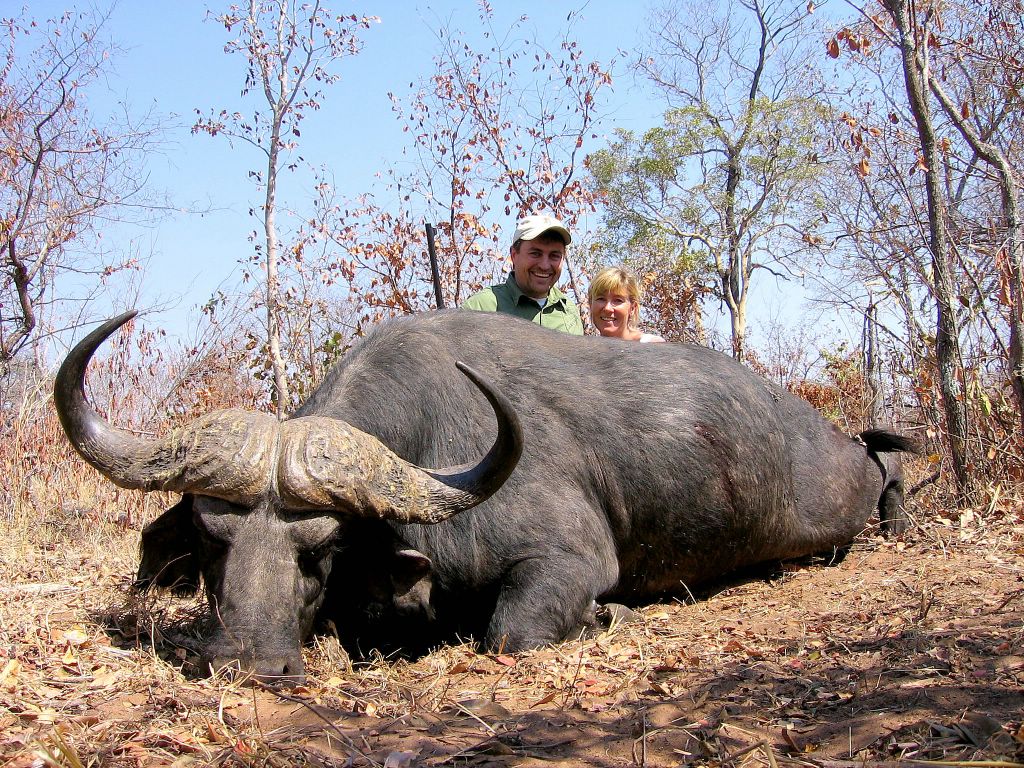
 The Clayton Arsenal was equipped with a Browning 22magnum which was a rifle that my grandfather gave me when I was 11. We also brought two Winchesters, a 270 which is a mid-sized caliber and the elephant gun – the 375 H&H Model 70. This is no pea shooter. I brought this rifle to Africa in 2005 to shoot this buffalo.
We went to Chabot Gun Club which is an awesome outdoor rifle range. The day was perfect, we had three benches at the end of the 100 yard line and we had ample room to setup the spotting scope to track our progress. The boys proceeded to make good progress with the 22 and the 270 but there were no takers for the Elephant Gun.
Below is Trevor and Jeremy shooting the 270 Winchester


After I fired it twice, they had a chance to feel the percussion and the see the recoil. Parker went first and proceeded to put a hole through the X at 100 yards. Very impressive. What’s funny is that the recoil pushed the gun back straight to his right eye. Thank God for eye protection and a scope with a rubber cushion. It was hilarious watching teenagers fire a big game rifle. Jeremy went next, also put it within 2 inches of the X and Trevor put two more holes on the paper at 10 o’clock.
I’m truly blessed to have the opportunity to teach these great young men how to safely handle firearms and shoot properly. Just as I remember my first experience behind a rifle, I'm sure they will remember this for the rest of their lives. These are the lessons my grandfather taught me and so the tradition continues. Next up is to teach them the prone and sitting position. We’ll see how their steady nerves hold-up without the bench.
Saturday, September 13, 2008
Parker's First Flight

It was a cool autumn morning in September with light air traffic and a low marine fog at the Livermore Municipal Airport. Parker was up at the crack of dawn to take his first flight in a Cessna Skyhawk with Bob, a friend from church. Pulling up to the fuel pumps, Bob maneuvered the Cessna towards the terminal while Parker and I watched from the observatory deck. After checking out the plane and refueling, Parker was geared up to go. Bob did his pre-flight checkup and Parker put on his headset. In a matter of a few minutes, I watched Parker fly away through the low cloud cover. I can only imagine the thrill Parker had while taking off in his first flight. It’s really exciting to watch your kids explore.
I'm very thankful for having mentors like Bob in our life. He is a very nice man and dedicates his time to flying people in need of healthcare on a volunteer basis. This is the organization that he belongs to: http://www.angelflight.org/.
Bob informed me that I could watch their flight on http://flightaware.com/. By punching in his tail number, 736KD, I could get real-time updates on the progress of their flight. You can be certain, I drove right home to check it out. How cool is that.
Parker and Bob flew with IFR to Paso Robles and stopped for brunch. Parker texted me that they landed. Of course, I knew that already. They flew on to Burbank to replace the oxygen in the plane as Bob is flying up to Oregon next week and needed to ensure he had sufficient coverage as they navigate around Mt. Shasta.

Parker returned home around 4 with a smile from ear to ear. He absolutely loved it. I’m quite sure that if Parker decides he wants to get a pilot’s license that he will achieve that goal. With diabetes you need to petition the FAA for a private license. Keep on exploring Parker!
Thursday, September 04, 2008
Amador Freshman Off To Rough Start
With triple digit heat bearing down on the artificial turf in Oakley, Coach Murphy and the Amador Freshman faced the Freedom Falcons for the season opener. Team captains Clayton, Hoffman and Worsey joined Freedom at midfield for the coin toss. Amador’s kicking team led by Johns took the field. The Falcons fast paced offense took control of the ball with a heads-up style of football. Amador defense led by Comensque, Kim, Gum, Hildebrand, Naveres and Worsey each had tackles in the first quarter. That alone was not sufficient to stop the Freedom drive. First quarter ended 8-0 with Freedom scoring their 2 point conversion in a sweep around the right end.
From the Amador 36, going from right to left the Amador Offense took the field under the helm of quarterback Cummings. At running back, Graves gained 12 yards and Cummings 9 but a series of penalties and an incomplete pass to Wessel forced a turnover on downs at the Amador 46 leaving the Falcons with a short field.
The Amador defense shutdown the next possession by Freedom in a 4 yard sack by Naveres and a blocked punt at 4th and 14 on the 35 yard line. More offensive penalties and some mixups with the snap, the Dons were four and out.
Naverez chipped in with two more sacks and Tadevich counted one for good measure. The Falcon sweep appeared again and the tally at half-time was 20-0 Falcons. Offensive production was heavily tilted in favor of the Falcons with 162 yards to Amador’s 30.
“They’re physical but you can absolutely handle them. We need to take away the sweep, and play our game. Win the battle one play at a time”, said Coach Murphy at the half.
From left to right, the Amador kickoff return team took the field and Chun recieved the kick at the Amador 2 and catapulted to the 35 before being brought down by the Falcons. On 4th and 12 from the 46 Amador turned over the ball on an interception.
Fired up, the Amador defense hit the field again. They held the Falcon’s to 13 yards forcing a punt from the 48 yard line. In the second offensive drive of the half, Graves and Cummings each delivered 11 yards rushing. Closing the third quarter the score stood 20-0.
Chun, Graves and Hildebrand each chipped in for tackles on defense. Missed tackles in the red zone led to the final touchdown by Freedom putting the deficit at 28-0. Graves returned the kick 20 yards to the 40. At quarterback, Seals gained 6 yards on 2 carries. Another missed snap led to a 9 yard setback and Amador was forced to turnover possession to the Falcons at midfield.
Final score: Freedom, 28, Amador 0.
In 5th quarter action, Amador Freshman shined through. Clayton stopped an end around sweep at the 10 yard line and a tough d-line stand shutdown the Falcon offense. On offense, Gathier had an 18 yard carry and Jamaca chipped in with a sweep for 5 yards. With twins right, quarterback Hill hit Papageorge on the last play of the game for the first Amador touchdown.
Following the game, Coach Murphy concluded, “We just need to pull the all pieces together and it starts with drills.”
From the Amador 36, going from right to left the Amador Offense took the field under the helm of quarterback Cummings. At running back, Graves gained 12 yards and Cummings 9 but a series of penalties and an incomplete pass to Wessel forced a turnover on downs at the Amador 46 leaving the Falcons with a short field.
The Amador defense shutdown the next possession by Freedom in a 4 yard sack by Naveres and a blocked punt at 4th and 14 on the 35 yard line. More offensive penalties and some mixups with the snap, the Dons were four and out.
Naverez chipped in with two more sacks and Tadevich counted one for good measure. The Falcon sweep appeared again and the tally at half-time was 20-0 Falcons. Offensive production was heavily tilted in favor of the Falcons with 162 yards to Amador’s 30.
“They’re physical but you can absolutely handle them. We need to take away the sweep, and play our game. Win the battle one play at a time”, said Coach Murphy at the half.
From left to right, the Amador kickoff return team took the field and Chun recieved the kick at the Amador 2 and catapulted to the 35 before being brought down by the Falcons. On 4th and 12 from the 46 Amador turned over the ball on an interception.
Fired up, the Amador defense hit the field again. They held the Falcon’s to 13 yards forcing a punt from the 48 yard line. In the second offensive drive of the half, Graves and Cummings each delivered 11 yards rushing. Closing the third quarter the score stood 20-0.
Chun, Graves and Hildebrand each chipped in for tackles on defense. Missed tackles in the red zone led to the final touchdown by Freedom putting the deficit at 28-0. Graves returned the kick 20 yards to the 40. At quarterback, Seals gained 6 yards on 2 carries. Another missed snap led to a 9 yard setback and Amador was forced to turnover possession to the Falcons at midfield.
Final score: Freedom, 28, Amador 0.
In 5th quarter action, Amador Freshman shined through. Clayton stopped an end around sweep at the 10 yard line and a tough d-line stand shutdown the Falcon offense. On offense, Gathier had an 18 yard carry and Jamaca chipped in with a sweep for 5 yards. With twins right, quarterback Hill hit Papageorge on the last play of the game for the first Amador touchdown.
Following the game, Coach Murphy concluded, “We just need to pull the all pieces together and it starts with drills.”
Friday, August 29, 2008
Your First Day of High School
How clear is that day for you? It’s in full motion video for me.
This week Parker started Amador Valley High School and the memories came flashing back. Many things are changing for high school students today, but the frog I had in my throat in September 1979 is the same sinking feeling I saw in Parker this week.
Growing up in a Catholic family, I wasn’t new to putting on a tie to go to school. For High School though there was no uniform. Today like the 70’s, mom’s still take their kids to get the latest fashions to go to high school. Then it was penny loafers, now it’s stylized Nike shoes…custom for your school colors built by you on the on the interactive website. Then it was Izod and Ralph Lauren and Ray Ban’s. Now it’s QuikSilver, RipCurl, Roxy, Abercrombie, DC Shoes. Levi’s are still a mainstay.
Like Parker, I played freshman football, sported a big tan and growing muscles on the first day of freshman year. We both had the peach fuzz under the nose that drove us crazy. I played center on offense and line on defense. Parker will play fullback on offense and cornerback on defense. He’s about my same height back then but 10 pounds heavier...and maybe a little better looking.
School lockers were cool then, now everything goes into the backpack. Hanging out in the locker room after school getting ready for football was awesome then and still is today. Eminence Front would be blaring in the locker room in ’79 and believe it not Electric Avenue circa 1983 was playing this week.
Clothing – well what can I say. Public School vs Catholic School. Parker dressed very nice but still wore shorts and a t-shirt. For me, it was a checked shirt, a knit tie and probably corduroys.
As for school, the feelings of being overwhelmed that I felt were shared by Parker. My school had 1,200 students, his more than 2,000. It’s not just the scale of campus but all the new experiences – cafeteria, teachers, teachers and of course all the new cute girls you've never seen before.
These coming high school years are going to be great fun. Like going back all over again.
This week Parker started Amador Valley High School and the memories came flashing back. Many things are changing for high school students today, but the frog I had in my throat in September 1979 is the same sinking feeling I saw in Parker this week.
Growing up in a Catholic family, I wasn’t new to putting on a tie to go to school. For High School though there was no uniform. Today like the 70’s, mom’s still take their kids to get the latest fashions to go to high school. Then it was penny loafers, now it’s stylized Nike shoes…custom for your school colors built by you on the on the interactive website. Then it was Izod and Ralph Lauren and Ray Ban’s. Now it’s QuikSilver, RipCurl, Roxy, Abercrombie, DC Shoes. Levi’s are still a mainstay.
Like Parker, I played freshman football, sported a big tan and growing muscles on the first day of freshman year. We both had the peach fuzz under the nose that drove us crazy. I played center on offense and line on defense. Parker will play fullback on offense and cornerback on defense. He’s about my same height back then but 10 pounds heavier...and maybe a little better looking.
School lockers were cool then, now everything goes into the backpack. Hanging out in the locker room after school getting ready for football was awesome then and still is today. Eminence Front would be blaring in the locker room in ’79 and believe it not Electric Avenue circa 1983 was playing this week.
Clothing – well what can I say. Public School vs Catholic School. Parker dressed very nice but still wore shorts and a t-shirt. For me, it was a checked shirt, a knit tie and probably corduroys.
As for school, the feelings of being overwhelmed that I felt were shared by Parker. My school had 1,200 students, his more than 2,000. It’s not just the scale of campus but all the new experiences – cafeteria, teachers, teachers and of course all the new cute girls you've never seen before.
These coming high school years are going to be great fun. Like going back all over again.
Tuesday, June 03, 2008
The War with Japan by Parker Clayton
Sixty-Six years ago today, the U.S. was reeling from the attack on Pearl Harbor. Japan was revising their military strategy because Lt. Col. James Doolittle was successful in raiding Japan from the USS Hornet. Leading the Japanese response was Admiral Isoroku Yamamoto. His strategy was to regroup the entire Imperial Navy and gain control of midway, the halfway point between Japan and Hawaii. Prior to Pearl Harbor, America was neutral in the war while Japan was part of the Axis power which included Germany and Italy. Franklin D. Roosevelt’s decision to freeze Japanese assets and embargo oil exports led to the attack of Pearl Harbor by the Japanese on December 7th, 1941.
World War II had started when dictators in Germany, Italy and Japan used the world wide great depression as a way to gain power. By promising people better times, they were able to gain powerful positions in the government and military. Japan’s government was filled with military leaders who wanted to conquer new territories. In 1940, Japan allowed their commercial treaty with America to expire.
Franklin D. Roosevelt’s enactment of the oil embargo marked a major event that provoked Japan bringing America into WWII. With the embargo, Japan lost 75% of their foreign trade, and 90% of their oil. America had crippled them without even fighting. The U.S. created this embargo because Japan was expanding into Southeast Asia and threatening America. Japan viewed this as an act of war, so they started their plans for an attack. Their first target was on the Hawaiian islands which was the base for the U.S. Navy in the Pacific. In Pearl Harbor there were 8 battleships, 8 cruisers, 30 destroyers, 4 submarines, and 390 aircraft stationed on the island. Japan chose to attack Pearl Harbor because it would cripple the U.S. Navy.
Japan started the war knowing full well that they didn’t have a choice, and that it was a war they were likely to lose. Admiral Yamamoto was in charge of the attack and it was his idea to attack Pearl Harbor. He calculated that Japan would need 300 planes traveling 300 miles to reach their destination. Morse code was their only form of communication. Joseph C. Grew, the ambassador to Japan, got word of the attack but passed it of as speculation.
At 5:30 a.m. on December 1st, 1941 the Japanese cruisers Chikuman and Tone sent search planes as a routine procedure to fly over the island and check their information. Without waiting for confirmation 43 fighters, 49 high level bombers, 51 dive bombers and 40 torpedo bombers were launched. The U.S. radar had in fact spotted the incoming planes, but the radar operator thought they were incoming B-17 bombers.
The first wave of planes came in and strafed grounded aircraft while dive bombers attacked the battleships. The U.S. was very unprepared for this attack and was only able to get a few planes into the air to defend the island. There were 402 aircraft on Hawaii, 188 were destroyed and 159 were damaged. In total, 18 U.S. ships were destroyed, including 5 battleships and 2 destroyers. In his speech, Franklin D. Roosevelt called December 7th, 1941 ‘a day which will live in infamy’. America was suddenly and violently at war.
By all accounts, the Battle of Midway was the most decisive Naval victory in U.S. history and a major waypoint in the war against Japan. It marked the point where the U.S. and Japanese naval fleets were equal, and America was quickly taking the offensive. Admiral Yamamoto was again heading the operation to capture Midway and he positioned Japan’s fleet towards Midway to try and draw out American carriers. He thought the U.S. carriers would come to fight but arrive too late to save the island. Yamamoto’s goal was to take back the island and establish an airfield and his strategy was to capture the island from three directions. Vice Admiral Chuichi Nagumo would attack from the northwest and his carriers would pin down Midway with long range fire, and deal with any incoming American warships. To back up Nagumo’s forces, Admiral Yamamoto would follow him a few hundred miles behind with his own battleship force. Meanwhile Vice Admiral Nobutake Kondo would take his battleships from the West and Southwest and be the one to actually capture Midway.
Yamamoto’s surprise attack was uncovered by American communications intelligence who broke the Japanese radio code and knew all of the Japanese battle plans, locations and attack times. The U.S. was ready and waiting. Admiral Chester Nimitz, the U.S. Pacific Fleet Commander, positioned his carriers to Ambush the Japanese on June 4th, 1942.
At 4:30 in the morning on June 4th 1942 Vice Admiral Chuichi Nagumo launched 108 planes to attack Midway, but what he didn’t know was that U.S. carriers were only 215 miles away and closing on his position. Both of the fleets had sent out search planes, the Japanese as a routine, and the U.S. to look for an enemy they knew was there.
Midway also sent out fighters to intercept the incoming Japanese bombers. However, the Marine fighters were overwhelmed, suffered heavy losses and only shot down a few Japanese bombers. The Japanese hit the island at 6:30 a.m. but weren’t successful in disabling the airfield. While the Japanese had been bombing Midway, the U.S. had launched a counterattack from Midway. The counterattack failed, but some high-flying B-17’s got pictures of the 4 Japanese carriers. When a tardy Japanese plane spotted the incoming Navy fleet. Since his planes were armed with the wrong kind of bombs Vice Admiral Nagumo had to retrieve and refit his planes with torpedoes to deal with the threat of the U.S. Pacific Fleet. At 9:30 a.m. the U.S. Navy launched torpedo planes against the Japanese ships.
The U.S. lost almost every plane but managed to slow down the oncoming Japanese attack. At 10:15 a.m. squadrons of SBD scout bombers attacked 3 of the 4 Japanese carriers. The carriers had fully fueled and ready to go planes on their decks. The carrier Akagi, Kaga and Soryu all went down. The only remaining carrier, the Hiryu sent out planes that destroyed the Yorktown. Finally U.S. bombers located the Hiryu and succeeded in sinking her. Commander Yamamoto called off the operation and called a retreat, marking a major event in World War II.
It finally looked like the Allied powers had a chance, after the Battle of Midway. The Navy was still pushing towards Japan, island by island while unknown to most, scientists in America were developing an atomic bomb. Germany finally surrendered in May 1945 ending Hitler’s regime. Franklin D. Roosevelt died in April 1945 in his 4th term of president. His successor Harry S. Truman made the controversial decision to drop the atomic bomb on Hiroshima and Nagasaki and end the war with Japan. This had been a very controversial way to end the war because of the huge amount of destruction it caused. 120,000 civilians were killed instantly on August 6th 1945, a horrible way to end any war. On September 2nd, 1945 on the USS Missouri Japan surrendered and World War II was finally over.
World War II had started when dictators in Germany, Italy and Japan used the world wide great depression as a way to gain power. By promising people better times, they were able to gain powerful positions in the government and military. Japan’s government was filled with military leaders who wanted to conquer new territories. In 1940, Japan allowed their commercial treaty with America to expire.
Franklin D. Roosevelt’s enactment of the oil embargo marked a major event that provoked Japan bringing America into WWII. With the embargo, Japan lost 75% of their foreign trade, and 90% of their oil. America had crippled them without even fighting. The U.S. created this embargo because Japan was expanding into Southeast Asia and threatening America. Japan viewed this as an act of war, so they started their plans for an attack. Their first target was on the Hawaiian islands which was the base for the U.S. Navy in the Pacific. In Pearl Harbor there were 8 battleships, 8 cruisers, 30 destroyers, 4 submarines, and 390 aircraft stationed on the island. Japan chose to attack Pearl Harbor because it would cripple the U.S. Navy.
Japan started the war knowing full well that they didn’t have a choice, and that it was a war they were likely to lose. Admiral Yamamoto was in charge of the attack and it was his idea to attack Pearl Harbor. He calculated that Japan would need 300 planes traveling 300 miles to reach their destination. Morse code was their only form of communication. Joseph C. Grew, the ambassador to Japan, got word of the attack but passed it of as speculation.
At 5:30 a.m. on December 1st, 1941 the Japanese cruisers Chikuman and Tone sent search planes as a routine procedure to fly over the island and check their information. Without waiting for confirmation 43 fighters, 49 high level bombers, 51 dive bombers and 40 torpedo bombers were launched. The U.S. radar had in fact spotted the incoming planes, but the radar operator thought they were incoming B-17 bombers.
The first wave of planes came in and strafed grounded aircraft while dive bombers attacked the battleships. The U.S. was very unprepared for this attack and was only able to get a few planes into the air to defend the island. There were 402 aircraft on Hawaii, 188 were destroyed and 159 were damaged. In total, 18 U.S. ships were destroyed, including 5 battleships and 2 destroyers. In his speech, Franklin D. Roosevelt called December 7th, 1941 ‘a day which will live in infamy’. America was suddenly and violently at war.
By all accounts, the Battle of Midway was the most decisive Naval victory in U.S. history and a major waypoint in the war against Japan. It marked the point where the U.S. and Japanese naval fleets were equal, and America was quickly taking the offensive. Admiral Yamamoto was again heading the operation to capture Midway and he positioned Japan’s fleet towards Midway to try and draw out American carriers. He thought the U.S. carriers would come to fight but arrive too late to save the island. Yamamoto’s goal was to take back the island and establish an airfield and his strategy was to capture the island from three directions. Vice Admiral Chuichi Nagumo would attack from the northwest and his carriers would pin down Midway with long range fire, and deal with any incoming American warships. To back up Nagumo’s forces, Admiral Yamamoto would follow him a few hundred miles behind with his own battleship force. Meanwhile Vice Admiral Nobutake Kondo would take his battleships from the West and Southwest and be the one to actually capture Midway.
Yamamoto’s surprise attack was uncovered by American communications intelligence who broke the Japanese radio code and knew all of the Japanese battle plans, locations and attack times. The U.S. was ready and waiting. Admiral Chester Nimitz, the U.S. Pacific Fleet Commander, positioned his carriers to Ambush the Japanese on June 4th, 1942.
At 4:30 in the morning on June 4th 1942 Vice Admiral Chuichi Nagumo launched 108 planes to attack Midway, but what he didn’t know was that U.S. carriers were only 215 miles away and closing on his position. Both of the fleets had sent out search planes, the Japanese as a routine, and the U.S. to look for an enemy they knew was there.
Midway also sent out fighters to intercept the incoming Japanese bombers. However, the Marine fighters were overwhelmed, suffered heavy losses and only shot down a few Japanese bombers. The Japanese hit the island at 6:30 a.m. but weren’t successful in disabling the airfield. While the Japanese had been bombing Midway, the U.S. had launched a counterattack from Midway. The counterattack failed, but some high-flying B-17’s got pictures of the 4 Japanese carriers. When a tardy Japanese plane spotted the incoming Navy fleet. Since his planes were armed with the wrong kind of bombs Vice Admiral Nagumo had to retrieve and refit his planes with torpedoes to deal with the threat of the U.S. Pacific Fleet. At 9:30 a.m. the U.S. Navy launched torpedo planes against the Japanese ships.
The U.S. lost almost every plane but managed to slow down the oncoming Japanese attack. At 10:15 a.m. squadrons of SBD scout bombers attacked 3 of the 4 Japanese carriers. The carriers had fully fueled and ready to go planes on their decks. The carrier Akagi, Kaga and Soryu all went down. The only remaining carrier, the Hiryu sent out planes that destroyed the Yorktown. Finally U.S. bombers located the Hiryu and succeeded in sinking her. Commander Yamamoto called off the operation and called a retreat, marking a major event in World War II.
It finally looked like the Allied powers had a chance, after the Battle of Midway. The Navy was still pushing towards Japan, island by island while unknown to most, scientists in America were developing an atomic bomb. Germany finally surrendered in May 1945 ending Hitler’s regime. Franklin D. Roosevelt died in April 1945 in his 4th term of president. His successor Harry S. Truman made the controversial decision to drop the atomic bomb on Hiroshima and Nagasaki and end the war with Japan. This had been a very controversial way to end the war because of the huge amount of destruction it caused. 120,000 civilians were killed instantly on August 6th 1945, a horrible way to end any war. On September 2nd, 1945 on the USS Missouri Japan surrendered and World War II was finally over.
Thursday, March 22, 2007
Watching Your Kid Win!
Last week was Parker's second wrestlig tournament of the season. He has had a great season with a better than 500 record. I am completely enjoying his wrestling as this by far is one of my favorite memories of high school. Wrestling unlike any sport teaches so many life lessons - discipline, respect, commitment, a desire to win and most of all self-confidence. It's just you and your opponent. There's no teammate or extenuating factors. You either win or lose. It's simple.
He started the tournament with a pin in the first round. In the second round he lost to a highly technical wrestler 5-2 who had great hand control.
Parker's third match of the day was a highlight of the entire tournament. The whole gym seemed to ignore the 4 other concurrent matches and watch his. His opponent came to the matt with a total attitude and opened the first period not wrestling but trying to intimidate and push Parker around. Off the matt they went and the attidude of his opponent intensified and only served to provoke a whole new level of self-confidence and tenacity in Parker. First period ended with a slight bloody nose of his opponent and two time outs due to 'injury'. His opponent was sure to make this a melodramatic match and proceeded to call time out and tell both his coach and parents to shut-up. At the end of the second period Parker was down 2-0 but his focus increased. More drama in the third period due to his opponents injury. The match seemed to go on forever. Parker started the third period on bottom. He quickly did a Hazel roll and reversed his opponent and put him on his back winning near fall back points. His opponent was so frustrated he tapped out the match which allows the ref to stop the match and award one penalty point. Now it's 6-2 Parker. He held tight and not only won this match but went on to pin his final opponent to win 3rd place in a qualifying state tournament!
Parker's confidence in himself is at an all time high and wrestling played a key part in that self awareness and development. I absolutely love watching him wrestle!
He started the tournament with a pin in the first round. In the second round he lost to a highly technical wrestler 5-2 who had great hand control.
Parker's third match of the day was a highlight of the entire tournament. The whole gym seemed to ignore the 4 other concurrent matches and watch his. His opponent came to the matt with a total attitude and opened the first period not wrestling but trying to intimidate and push Parker around. Off the matt they went and the attidude of his opponent intensified and only served to provoke a whole new level of self-confidence and tenacity in Parker. First period ended with a slight bloody nose of his opponent and two time outs due to 'injury'. His opponent was sure to make this a melodramatic match and proceeded to call time out and tell both his coach and parents to shut-up. At the end of the second period Parker was down 2-0 but his focus increased. More drama in the third period due to his opponents injury. The match seemed to go on forever. Parker started the third period on bottom. He quickly did a Hazel roll and reversed his opponent and put him on his back winning near fall back points. His opponent was so frustrated he tapped out the match which allows the ref to stop the match and award one penalty point. Now it's 6-2 Parker. He held tight and not only won this match but went on to pin his final opponent to win 3rd place in a qualifying state tournament!
Parker's confidence in himself is at an all time high and wrestling played a key part in that self awareness and development. I absolutely love watching him wrestle!
Subscribe to:
Posts (Atom)

 Posts
Posts