How lucky I am; lucky to be able to listen and learn from global business and political leaders first hand. I’ve heard Colin Powell, Former Secretary of State, Donald Feinstein, Reagan’s Chief Economic Advisor and today Matt Simmons of Simmons & Company International, a leading investment banking firm focused on the energy industry.
Mr. Simmons is considered the 'high priest' of peak oil, is a member of the Council on Foreign Affairs and has written many books on the subject. His views are very provocative. For example, he suggested 500 – 700 might be the fair price for a barrel of oil. Now that’s provocative given oil is at $39 per barrel this week and down more than 70% in the last six months. Why? Because 90% of global oil rigs are 29 years old and will require trillions to repair and replace over the coming decades. Here is his presentation on surviving the post oil peak.
Speaking extemporaneously from notes, Mr. Simmons addressed the250 participants of the 2009 Oracle Oil & Gas Summit in Houston. His presentation covered many subjects from the ‘Rust’ issue and asset aging issue to the poor cost estimation of exploration to the aging workforce. With kids not far from college, the last point caught my interest.
I am very aware of the aging US workforce and I’m sure if I attended a healthcare conference or a manufacturing conference I would hear the same remarks – the high volume of baby boomers retiring will leave a huge talent vacuum and put America in a difficult economic situation. The Oil & Gas and Energy industries problem is more severe than others. Oil & Gas is the largest single industry on the planet and ²/з of their workforce is planning to retire in the next 5 years. Their geophysicists and thermal engineers average age is 59. American universities are not producing nearly the replacement power of the older generation.
Every industry goes through peaks and valleys on talent. In the 1980’s there was a strong demand for more accountants. In the 90’s we were paying web developers $150,000 to write HTML code. The 2000’s were all about financial engineering and Wall Street was enticing all the best and the brightest from American universities. Each generation has its unique talent needs and some important US industries are getting left behind. Unfortunately, countries like China and India have a very different demographic makeup and they are prepared to fill this global shortage.
What kind of engineers does America need? Engineers to invent clean energy, engineers to figure out more efficient ways to produce oil, engineers to reduce carbon emissions. You name it, we need more engineers. I can’t believe I’m saying that. I predict pocket protectors will be in vogue in 2020. What is a major twist on the needs of engineers for the future is they need to deeply understand their scientific field and understand business/finance. Mr. Simmons iterated this point many times.
When posed the question about alternative energy, Mr. Simmons spoke eloquently about how little green energy contributes to the increasing global demand for energy. This wasn’t new information but here’s what he said. “Globally, oil usage is 85 million barrels per day. At best, clean tech energy sources can (in the future) produce the equivalent of 7,000 barrels per day. That's less that 1/10 of 1%. This would include wind, geothermal, ethanol and nuclear combined.” Personally he believes offshore wind generation has great potential and this is why he sponsored a project off the coast of Maine to explore.
Mr. Simmons perspective on what to do was commonsense. He believes energy conservation is critical to sustaining this global crisis. He believes we need to travel less and consume goods made closer to home. He believes the 230 million US passenger fleet will not be replaced over night and likely not in the next 30-50 years. On the future of battery technology he flippantly said the best we can do is double the lifespan of laptop batteries. Funny but expected from an Oil man.
With kids less than 10 years from entering the workforce, his message really struck home. My hope for Parker and Hunter is that they learn about the different facets of science and that one field or another sparks their interest. I’m not convinced high school ‘guidance counselors’ have a clue about how to channel interests into careers. We haven’t begun this process with Parker yet and I hope I’m wrong on this topic.
In the coming years ahead, the most we can do at this stage of their lives is to expose them to many different professions (particularly those in strong demand) and let fate take its course. Fortunately I’ve developed great professional and personal relationships with leaders in many industries and they’re a phone call away from visiting their shop and discussing their profession. Many would be delighted to talk to young people about their work.
Now more than ever before, high school students need to think more about their interests and careers as the global market for talent is extremely competitive and there are serious imbalances among professions and industries.
Wednesday, April 22, 2009

Wednesday, March 25, 2009
Friends Rendezvous in Cordoba
 Many sports create friendships but the sport of hunting creates bonds that last a lifetime. Being outdoors and hunting with your friends is one of life’s greatest rewards. In the open spaces, all technology distractions and work issues are completely lost the moment you start hunting. What matters most is the hunting situation – the wind, the sun, the clouds and the presence of your quarry. It’s impossible to consider anything else. As my wife would say you’re just ‘being in the moment’.
Earlier this month, my business required me to travel to Brazil and Argentina. On a whim, I texted my good friend Todd Williver from Central Oregon to see if he could break away from teaching and go dove hunting in Cordoba. It was a long shot but a few minutes later, I got a reply…absolutely. We’ve talked for several years about the possibility of bird hunting in South America but the chances looked slim as we both have demanding schedules and he has toddlers.
No way, could this actually materialize? I had plenty of air miles so getting there wouldn’t be a problem for me and my mate. With less than two months to go, we began researching and I reached out to an outfitter I met at SCI in Reno called Los Gauchos. We both had a pretty tight agenda and could only hunt for the weekend. They came back with an outstanding package that wasn’t a budget buster and we would join up with two other hunting parties at Sierra Brava Lodge located about 100 kilometers north of Cordoba.
After meeting customers in Buenos Aires I met Todd at the Aeroparque to go to Cordoba. I had been on the road for business for a week and Todd had a 24 hour journey from Portland—we were both anxious to hunt and kick back in the Argentine countryside. On arrival into Cordoba, we were greeted by our new best friend and retired attorney, Topo Zsaravnik. Topo’s not his real name of course but that’s another story. Todd and I weren’t the only pasty white guys on the flight but Topo gave one good look at us and said…those boys must be my hunters. And we weren’t even wearing any camo!
Within minutes of pulling away from the Cordoba airport, we talked about the geography, the climate, the bird species and the hunting techniques and traditions. Topo is quite the world traveler so we traded stories about hunting and fishing in the US. Within the first hour Todd and I both knew this would be an experience of a lifetime. This isn’t the first time I’ve made new friends while hunting internationally, but with each trip, I’m convinced that hunting transcends all cultures and continents. This shared passion turns strangers into friends in no time and this trip was no exception.
We arrived in the evening and Topo made plans for a brief hunt before heading back to Sierra Brava. Two new friends – Martin and Sergio. They were to be our bird boys for the weekend. Clean shaven young men who we would later find out were amazing shots. Arriving at the lodge just after dusk, we were greeted by JJ Sala the owner and his friendly staff with a cold towel for our faces.
Sierra Brava is an exquisite lodge that has 100 years of history. It was JJ’s vision to restore the previous stage stop and create a spectacular hunting lodge with modern amenities but keeping the Old World feel. Champagne was served and Kenny Rodgers and Johnny Cash played in the background as we got acquainted with this unique piece of Argentine history.
Topo organized a spectacular Argentine meal complete with steak, Topo’s own homemade Chimichurri sauce and a caramel peach dessert. We had no idea he was an amazing cook. For dinner we were joined two lifetime friends from Casper Wyoming – Rick Kennerknecht and Colter Anderson. Rick and I talked Africa while Todd and Coulter swapped fly-fishing stories.
Rick had been to Argentina many times as he runs an outfitter called Global Sporting Safaris. Colter, like Todd and I were new to South America. With a great meal, everyone retired early for the evening to prepare for the high volume dove hunting the next day.
 The four Texans arrived the next afternoon in time for a hot lunch served fresh in the field. Topo and his crew worked their magic and served a corn pie and two types of steaks that were mesquite grilled to perfection. Like Todd and I, the Texans had their share of stories and had hunted together for many years. After exchanging tales and taking a siesta we all headed back to the fields.
You’ve seen it all, right? You’ve hunted Pheasants in South Dakota, Chukkar in Oregon, Ducks on the Atlantic and Pacific Flyways, Quail in California and Guinea Fowl and Francolin in South Africa. Think again. You’ve seen nothing until you see Doves in Cordoba. The first two hours in the field are incomprehensible. Even if you’ve seen the videos and talked to the guides, being in a Dove blind when hundreds, literally hundreds, of Doves are flying by you is difficult to imagine. Martin, my bird boy, kept saying…left, right, up, behind, left. I was dizzy. Concentrate I said to myself. There were more shooting opportunities that morning than last hunting season in Oregon. It was picture perfect weather and not a cloud in the sky. Temps were in the 80-90’s with very little wind. What more could you ask for?

The morning tallied 360 birds for Todd and 34 for me. Todd had spied the 1000 Club Member board in the lodge the night before and was destined to achieve that on his first day. Not that we were keeping score, but I ended the day at 150 and Todd at 1002. Granted, Todd shot 2x the shells as I did.
As daylight faded, waves upon waves of doves flew over the sorghum fields and Coulter was fast on the crossers. Like Todd, Coulter joined the 1000 Club Member shooting over 1,500. A few cold beers in the field and we packed up on the truck and headed back to the lodge.
Our second day was equally as exciting and challenging. No one cared to honestly admit to how sore their shoulder was but I noticed many of us shot considerably fewer shells that day. The hunting situation was considerably different from the day before. On this occasion, we would hunt on a cattle ranch and corn fields that had been harvested. My shooting improved but nothing like that of Martin, my bird boy. He was taking some long crack shots I didn’t think were possible with a 20 gauge. All in all, the group shot 1000’s of birds with two of the Texans shooting 2,000 apiece.

Topo and JJ had arranged for some fine Argentine entertainment and dinner.
We’d grown fond of their cooking and our second night’s meal was a gastronomical delight complete with Argentine beef and fine wines. The folk music was very enjoyable and told the story of rural Argentina.
We all retired to a blazing campfire to share stories, kick back and smoke cigars. With the right group of friends, campfires can be magical. Everyone loves a great story and many that are shared and slightly embellished in this hunting ritual. This night, the air was crisp and the stories were tall. It was a full Harvest Moon and not a cloud in the sky. Orion, the hunter, along with the Southern Cross came into sight along the horizon.
Sunday morning brought colder temps and a low pressure system from the foothills of the Andes. As we packed our bags to head back to US, we reflected on the great hunting and exceptional experience of staying with JJ and Topo at the Sierra Brava Lodge. Hunting trips like these are irreplaceable. Beyond relaxing and great hunting, its times like these that provide you the unique opportunity to make new hunting partners and renew your friendship with your buddies.
Monday, March 09, 2009
Sao Paulo

In Sao Paulo this week for The Oracle Open World show. Just got in yesterday and the show begins tomorrow. The photo is from my remote office, eh I mean, hotel.
Sunday, February 22, 2009
Shooting Rifles
 Last week I took Parker and two friends to the rifle range. Parker is hooked on shooting and he’s quite good. OK, he's sitting on a stationary bench with a 20 power rifle scope but still it requires skill to consistently put holes on the paper. We’ve enjoyed taking Trevor and Jeremy and their dad, Robert trap shooting but this was the first time they went to a rifle range. Jeremy had experience shooting 22’s but nothing much bigger than that.
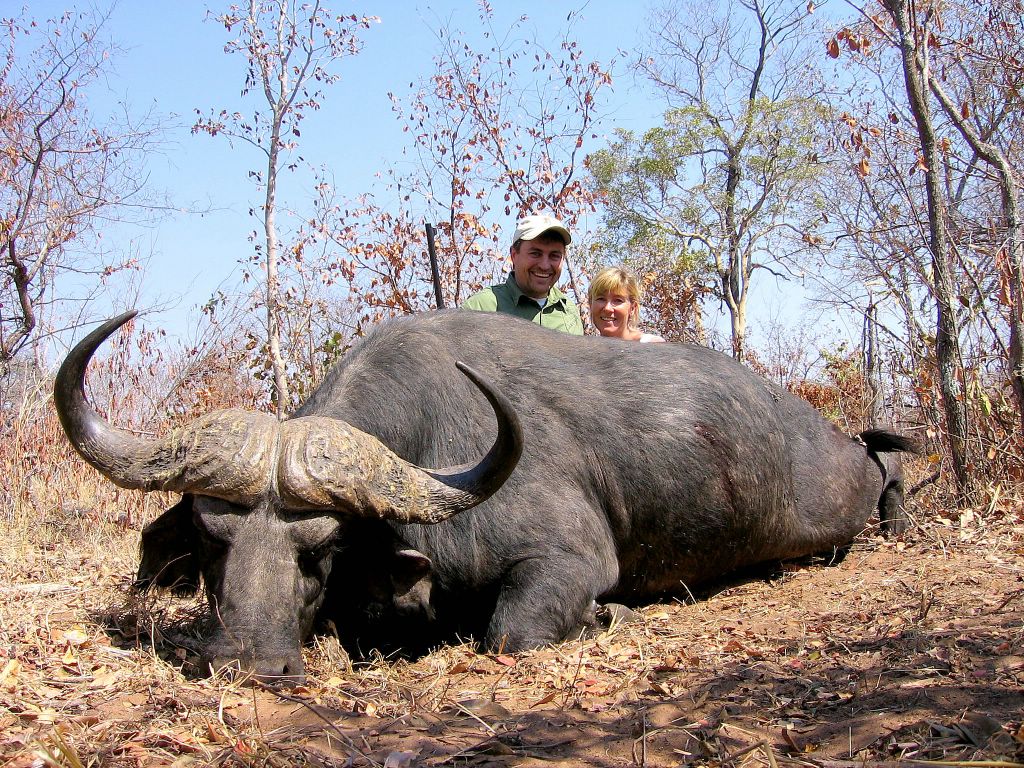
 The Clayton Arsenal was equipped with a Browning 22magnum which was a rifle that my grandfather gave me when I was 11. We also brought two Winchesters, a 270 which is a mid-sized caliber and the elephant gun – the 375 H&H Model 70. This is no pea shooter. I brought this rifle to Africa in 2005 to shoot this buffalo.
We went to Chabot Gun Club which is an awesome outdoor rifle range. The day was perfect, we had three benches at the end of the 100 yard line and we had ample room to setup the spotting scope to track our progress. The boys proceeded to make good progress with the 22 and the 270 but there were no takers for the Elephant Gun.
Below is Trevor and Jeremy shooting the 270 Winchester


After I fired it twice, they had a chance to feel the percussion and the see the recoil. Parker went first and proceeded to put a hole through the X at 100 yards. Very impressive. What’s funny is that the recoil pushed the gun back straight to his right eye. Thank God for eye protection and a scope with a rubber cushion. It was hilarious watching teenagers fire a big game rifle. Jeremy went next, also put it within 2 inches of the X and Trevor put two more holes on the paper at 10 o’clock.
I’m truly blessed to have the opportunity to teach these great young men how to safely handle firearms and shoot properly. Just as I remember my first experience behind a rifle, I'm sure they will remember this for the rest of their lives. These are the lessons my grandfather taught me and so the tradition continues. Next up is to teach them the prone and sitting position. We’ll see how their steady nerves hold-up without the bench.
Sunday, November 30, 2008
On Location with Hunter in Rome
 Before it was politically correct, I’ve been taking my kids to work. Yes even before they created the official ‘bring your kids to work’ day. Parker once sat through an all-day marketing meeting when he was 14 months old. I forgot to change his diapers so at lunch I had to duck into the local shopping mall and buy him all new clothes. My colleagues from Pilot Software were impressed that I brought Parker a change of clothes. Hah.
Both Parker and Hunter have now seen first hand what dad does at work. Several years ago, I took Parker to London on an analyst tour, and this year, it was Hunter’s turn.
Our destination: Rome. Our pictures can be viewed here.
This business trip was focused on building customer loyalty and gathering the senior executives from our largest European customers to discuss how we can help them gain more value from the software they have already purchased from Oracle. We expected 50 and 17 attended. The global recession has cut back business travel significantly. The business meeting wasn’t great but the experience of exploring Rome with Hunter was phenomenal.
As Hunter was flying on a United Awards Ticket, we got to Rome the long way…through Washington DC. We arrived early Sunday morning and found our way to the hotel without any delay. We unpacked and went to the lobby to have breakfast in the hotel…European Breakfast that is. Capucine, a friend from Oracle France, and her boyfriend were about to begin exploring as we met them in the lobby. We decided to take a short breakfast with them and go together to the Vatican. We arrived at St. Peter’s square mid-day on Sunday.
The Cathedral was definitely a high point for Hunter. She was intrigued by all the statues of previous Pope’s. We decided to take the journey to the top of the dome and explore Rome from St. Peter’s cupola. From the lift, it was only 320 steps. My left knee remembers each and every one.
It was a partly cloudy morning in Rome with temps in the mid-50’s. We headed down to the main part of the Cathedral to find a large ceremony getting underway with 30+ important looking church officials processing into the center of the Church. We think they were all Cardinal’s but weren’t 100% certain. They looked important: lots of security and photographers.
The Vatican Museum was closed so we would have to do it another day. Together with Capucine and David, we walked back across the river past the Saint Angelo Castle to make our way over towards the Piazza Novena to have lunch. We found a great café on the square and ordered classic Roman Pizza as Hunter began to fade. I thought she was going to put her face right into the Italian pie. She made it through lunch…just barely. We headed back to the hotel so that Hunter could take a nap and I could begin preparations for our conference on Monday.
Day One, Part Two. Hunter joined the Oracle team for dinner on Sunday night which was located on the top of the Spanish Steps. In transit, we saw several street peddlers quickly pickup shop, sloop their wares over their shoulder and hustle up the Spanish Steps and vanish out of site. Rome police were obviously coming but nobody saw them. As expected, two hours later the peddlers had setup shop again on the Steps to hustle another tourist. Filmmakers occuppied the Spanish Steps that night and it was cool to see the action. Very entertaining.
Monday our business meeting started at 2pm and Hunter sat in the back while I moderated a discussion on risk management. The subject is obviously a hot topic now but unfortunately ½ of the customers spoke very little English. Five in fact only spoke Polish. My polish is minimal. Ted Bories, a close family friend was Polish and taught me: Na zdrowie. That means cheers. Oh well.
Hunter and I took a wonderful walk towards the Spanish Steps after our meeting on Monday evening. We found the shirtmaker, Dan of Roma and explored the shopping district a bit. Dinner was a classic four course Italian dinner with excellent mozzarella salad and of course tiramisu. Hunter was quickly becoming a connoisseur of tiramisu because I think she had it nearly everyday.
Tuesday our business meeting went until 2pm which gave Hunter time to work on homework. It is so awesome that she can do school work using online lessons that her teachers setup 6,000 miles away. Isn’t it great that she could explore another country and still keep up on schoolwork at the same time? The wonders of technology.
In the category of a strange coincidence, our neighbors from Pleasanton were in Rome the same week. Hunter and I joined Scott and Debbie Myers for a great dinner at a small café in the piazza by the Pantheon. We walked the streets and found a great gelato shop where we all indulged in some home made Italian ice cream. Late that evening we saw the Trevi Fountain. Magnificent. It was their 20th anniversary and they were headed to Florence tomorrow.
Wednesday was our first chance to explore and Hunter’s first choice was to check out the Coliseum and the Roman Forum. We had a great time walking through these ancient ruins. Being in the presence of these environments, it’s easy to visualize emperors hailing from Palatine Hill above the peasants. We saw doors on one building made of copper which were dated to 74 BC. Now that’s old, really old.
Walking up, down and around the forum, we were both exhausted. We covered many miles and countless flights of steps. More Motrin please. We had a great lunch near the Piazza Novena and headed over to the Mouth of Truth. The Mouth of Truth hangs in the lobby of the Santa Maria church built in 1632. A bit of history can be found
As Hunter was flying on a United Awards Ticket, we got to Rome the long way…through Washington DC. We arrived early Sunday morning and found our way to the hotel without any delay. We unpacked and went to the lobby to have breakfast in the hotel…European Breakfast that is. Capucine, a friend from Oracle France, and her boyfriend were about to begin exploring as we met them in the lobby. We decided to take a short breakfast with them and go together to the Vatican. We arrived at St. Peter’s square mid-day on Sunday.
The Cathedral was definitely a high point for Hunter. She was intrigued by all the statues of previous Pope’s. We decided to take the journey to the top of the dome and explore Rome from St. Peter’s cupola. From the lift, it was only 320 steps. My left knee remembers each and every one.
It was a partly cloudy morning in Rome with temps in the mid-50’s. We headed down to the main part of the Cathedral to find a large ceremony getting underway with 30+ important looking church officials processing into the center of the Church. We think they were all Cardinal’s but weren’t 100% certain. They looked important: lots of security and photographers.
The Vatican Museum was closed so we would have to do it another day. Together with Capucine and David, we walked back across the river past the Saint Angelo Castle to make our way over towards the Piazza Novena to have lunch. We found a great café on the square and ordered classic Roman Pizza as Hunter began to fade. I thought she was going to put her face right into the Italian pie. She made it through lunch…just barely. We headed back to the hotel so that Hunter could take a nap and I could begin preparations for our conference on Monday.
Day One, Part Two. Hunter joined the Oracle team for dinner on Sunday night which was located on the top of the Spanish Steps. In transit, we saw several street peddlers quickly pickup shop, sloop their wares over their shoulder and hustle up the Spanish Steps and vanish out of site. Rome police were obviously coming but nobody saw them. As expected, two hours later the peddlers had setup shop again on the Steps to hustle another tourist. Filmmakers occuppied the Spanish Steps that night and it was cool to see the action. Very entertaining.
Monday our business meeting started at 2pm and Hunter sat in the back while I moderated a discussion on risk management. The subject is obviously a hot topic now but unfortunately ½ of the customers spoke very little English. Five in fact only spoke Polish. My polish is minimal. Ted Bories, a close family friend was Polish and taught me: Na zdrowie. That means cheers. Oh well.
Hunter and I took a wonderful walk towards the Spanish Steps after our meeting on Monday evening. We found the shirtmaker, Dan of Roma and explored the shopping district a bit. Dinner was a classic four course Italian dinner with excellent mozzarella salad and of course tiramisu. Hunter was quickly becoming a connoisseur of tiramisu because I think she had it nearly everyday.
Tuesday our business meeting went until 2pm which gave Hunter time to work on homework. It is so awesome that she can do school work using online lessons that her teachers setup 6,000 miles away. Isn’t it great that she could explore another country and still keep up on schoolwork at the same time? The wonders of technology.
In the category of a strange coincidence, our neighbors from Pleasanton were in Rome the same week. Hunter and I joined Scott and Debbie Myers for a great dinner at a small café in the piazza by the Pantheon. We walked the streets and found a great gelato shop where we all indulged in some home made Italian ice cream. Late that evening we saw the Trevi Fountain. Magnificent. It was their 20th anniversary and they were headed to Florence tomorrow.
Wednesday was our first chance to explore and Hunter’s first choice was to check out the Coliseum and the Roman Forum. We had a great time walking through these ancient ruins. Being in the presence of these environments, it’s easy to visualize emperors hailing from Palatine Hill above the peasants. We saw doors on one building made of copper which were dated to 74 BC. Now that’s old, really old.
Walking up, down and around the forum, we were both exhausted. We covered many miles and countless flights of steps. More Motrin please. We had a great lunch near the Piazza Novena and headed over to the Mouth of Truth. The Mouth of Truth hangs in the lobby of the Santa Maria church built in 1632. A bit of history can be found
Saturday, September 13, 2008
Parker's First Flight

It was a cool autumn morning in September with light air traffic and a low marine fog at the Livermore Municipal Airport. Parker was up at the crack of dawn to take his first flight in a Cessna Skyhawk with Bob, a friend from church. Pulling up to the fuel pumps, Bob maneuvered the Cessna towards the terminal while Parker and I watched from the observatory deck. After checking out the plane and refueling, Parker was geared up to go. Bob did his pre-flight checkup and Parker put on his headset. In a matter of a few minutes, I watched Parker fly away through the low cloud cover. I can only imagine the thrill Parker had while taking off in his first flight. It’s really exciting to watch your kids explore.
I'm very thankful for having mentors like Bob in our life. He is a very nice man and dedicates his time to flying people in need of healthcare on a volunteer basis. This is the organization that he belongs to: http://www.angelflight.org/.
Bob informed me that I could watch their flight on http://flightaware.com/. By punching in his tail number, 736KD, I could get real-time updates on the progress of their flight. You can be certain, I drove right home to check it out. How cool is that.
Parker and Bob flew with IFR to Paso Robles and stopped for brunch. Parker texted me that they landed. Of course, I knew that already. They flew on to Burbank to replace the oxygen in the plane as Bob is flying up to Oregon next week and needed to ensure he had sufficient coverage as they navigate around Mt. Shasta.

Parker returned home around 4 with a smile from ear to ear. He absolutely loved it. I’m quite sure that if Parker decides he wants to get a pilot’s license that he will achieve that goal. With diabetes you need to petition the FAA for a private license. Keep on exploring Parker!
Thursday, September 04, 2008
Amador Freshman Off To Rough Start
With triple digit heat bearing down on the artificial turf in Oakley, Coach Murphy and the Amador Freshman faced the Freedom Falcons for the season opener. Team captains Clayton, Hoffman and Worsey joined Freedom at midfield for the coin toss. Amador’s kicking team led by Johns took the field. The Falcons fast paced offense took control of the ball with a heads-up style of football. Amador defense led by Comensque, Kim, Gum, Hildebrand, Naveres and Worsey each had tackles in the first quarter. That alone was not sufficient to stop the Freedom drive. First quarter ended 8-0 with Freedom scoring their 2 point conversion in a sweep around the right end.
From the Amador 36, going from right to left the Amador Offense took the field under the helm of quarterback Cummings. At running back, Graves gained 12 yards and Cummings 9 but a series of penalties and an incomplete pass to Wessel forced a turnover on downs at the Amador 46 leaving the Falcons with a short field.
The Amador defense shutdown the next possession by Freedom in a 4 yard sack by Naveres and a blocked punt at 4th and 14 on the 35 yard line. More offensive penalties and some mixups with the snap, the Dons were four and out.
Naverez chipped in with two more sacks and Tadevich counted one for good measure. The Falcon sweep appeared again and the tally at half-time was 20-0 Falcons. Offensive production was heavily tilted in favor of the Falcons with 162 yards to Amador’s 30.
“They’re physical but you can absolutely handle them. We need to take away the sweep, and play our game. Win the battle one play at a time”, said Coach Murphy at the half.
From left to right, the Amador kickoff return team took the field and Chun recieved the kick at the Amador 2 and catapulted to the 35 before being brought down by the Falcons. On 4th and 12 from the 46 Amador turned over the ball on an interception.
Fired up, the Amador defense hit the field again. They held the Falcon’s to 13 yards forcing a punt from the 48 yard line. In the second offensive drive of the half, Graves and Cummings each delivered 11 yards rushing. Closing the third quarter the score stood 20-0.
Chun, Graves and Hildebrand each chipped in for tackles on defense. Missed tackles in the red zone led to the final touchdown by Freedom putting the deficit at 28-0. Graves returned the kick 20 yards to the 40. At quarterback, Seals gained 6 yards on 2 carries. Another missed snap led to a 9 yard setback and Amador was forced to turnover possession to the Falcons at midfield.
Final score: Freedom, 28, Amador 0.
In 5th quarter action, Amador Freshman shined through. Clayton stopped an end around sweep at the 10 yard line and a tough d-line stand shutdown the Falcon offense. On offense, Gathier had an 18 yard carry and Jamaca chipped in with a sweep for 5 yards. With twins right, quarterback Hill hit Papageorge on the last play of the game for the first Amador touchdown.
Following the game, Coach Murphy concluded, “We just need to pull the all pieces together and it starts with drills.”
From the Amador 36, going from right to left the Amador Offense took the field under the helm of quarterback Cummings. At running back, Graves gained 12 yards and Cummings 9 but a series of penalties and an incomplete pass to Wessel forced a turnover on downs at the Amador 46 leaving the Falcons with a short field.
The Amador defense shutdown the next possession by Freedom in a 4 yard sack by Naveres and a blocked punt at 4th and 14 on the 35 yard line. More offensive penalties and some mixups with the snap, the Dons were four and out.
Naverez chipped in with two more sacks and Tadevich counted one for good measure. The Falcon sweep appeared again and the tally at half-time was 20-0 Falcons. Offensive production was heavily tilted in favor of the Falcons with 162 yards to Amador’s 30.
“They’re physical but you can absolutely handle them. We need to take away the sweep, and play our game. Win the battle one play at a time”, said Coach Murphy at the half.
From left to right, the Amador kickoff return team took the field and Chun recieved the kick at the Amador 2 and catapulted to the 35 before being brought down by the Falcons. On 4th and 12 from the 46 Amador turned over the ball on an interception.
Fired up, the Amador defense hit the field again. They held the Falcon’s to 13 yards forcing a punt from the 48 yard line. In the second offensive drive of the half, Graves and Cummings each delivered 11 yards rushing. Closing the third quarter the score stood 20-0.
Chun, Graves and Hildebrand each chipped in for tackles on defense. Missed tackles in the red zone led to the final touchdown by Freedom putting the deficit at 28-0. Graves returned the kick 20 yards to the 40. At quarterback, Seals gained 6 yards on 2 carries. Another missed snap led to a 9 yard setback and Amador was forced to turnover possession to the Falcons at midfield.
Final score: Freedom, 28, Amador 0.
In 5th quarter action, Amador Freshman shined through. Clayton stopped an end around sweep at the 10 yard line and a tough d-line stand shutdown the Falcon offense. On offense, Gathier had an 18 yard carry and Jamaca chipped in with a sweep for 5 yards. With twins right, quarterback Hill hit Papageorge on the last play of the game for the first Amador touchdown.
Following the game, Coach Murphy concluded, “We just need to pull the all pieces together and it starts with drills.”
Friday, August 29, 2008
Your First Day of High School
How clear is that day for you? It’s in full motion video for me.
This week Parker started Amador Valley High School and the memories came flashing back. Many things are changing for high school students today, but the frog I had in my throat in September 1979 is the same sinking feeling I saw in Parker this week.
Growing up in a Catholic family, I wasn’t new to putting on a tie to go to school. For High School though there was no uniform. Today like the 70’s, mom’s still take their kids to get the latest fashions to go to high school. Then it was penny loafers, now it’s stylized Nike shoes…custom for your school colors built by you on the on the interactive website. Then it was Izod and Ralph Lauren and Ray Ban’s. Now it’s QuikSilver, RipCurl, Roxy, Abercrombie, DC Shoes. Levi’s are still a mainstay.
Like Parker, I played freshman football, sported a big tan and growing muscles on the first day of freshman year. We both had the peach fuzz under the nose that drove us crazy. I played center on offense and line on defense. Parker will play fullback on offense and cornerback on defense. He’s about my same height back then but 10 pounds heavier...and maybe a little better looking.
School lockers were cool then, now everything goes into the backpack. Hanging out in the locker room after school getting ready for football was awesome then and still is today. Eminence Front would be blaring in the locker room in ’79 and believe it not Electric Avenue circa 1983 was playing this week.
Clothing – well what can I say. Public School vs Catholic School. Parker dressed very nice but still wore shorts and a t-shirt. For me, it was a checked shirt, a knit tie and probably corduroys.
As for school, the feelings of being overwhelmed that I felt were shared by Parker. My school had 1,200 students, his more than 2,000. It’s not just the scale of campus but all the new experiences – cafeteria, teachers, teachers and of course all the new cute girls you've never seen before.
These coming high school years are going to be great fun. Like going back all over again.
This week Parker started Amador Valley High School and the memories came flashing back. Many things are changing for high school students today, but the frog I had in my throat in September 1979 is the same sinking feeling I saw in Parker this week.
Growing up in a Catholic family, I wasn’t new to putting on a tie to go to school. For High School though there was no uniform. Today like the 70’s, mom’s still take their kids to get the latest fashions to go to high school. Then it was penny loafers, now it’s stylized Nike shoes…custom for your school colors built by you on the on the interactive website. Then it was Izod and Ralph Lauren and Ray Ban’s. Now it’s QuikSilver, RipCurl, Roxy, Abercrombie, DC Shoes. Levi’s are still a mainstay.
Like Parker, I played freshman football, sported a big tan and growing muscles on the first day of freshman year. We both had the peach fuzz under the nose that drove us crazy. I played center on offense and line on defense. Parker will play fullback on offense and cornerback on defense. He’s about my same height back then but 10 pounds heavier...and maybe a little better looking.
School lockers were cool then, now everything goes into the backpack. Hanging out in the locker room after school getting ready for football was awesome then and still is today. Eminence Front would be blaring in the locker room in ’79 and believe it not Electric Avenue circa 1983 was playing this week.
Clothing – well what can I say. Public School vs Catholic School. Parker dressed very nice but still wore shorts and a t-shirt. For me, it was a checked shirt, a knit tie and probably corduroys.
As for school, the feelings of being overwhelmed that I felt were shared by Parker. My school had 1,200 students, his more than 2,000. It’s not just the scale of campus but all the new experiences – cafeteria, teachers, teachers and of course all the new cute girls you've never seen before.
These coming high school years are going to be great fun. Like going back all over again.
Tuesday, June 03, 2008
The War with Japan by Parker Clayton
Sixty-Six years ago today, the U.S. was reeling from the attack on Pearl Harbor. Japan was revising their military strategy because Lt. Col. James Doolittle was successful in raiding Japan from the USS Hornet. Leading the Japanese response was Admiral Isoroku Yamamoto. His strategy was to regroup the entire Imperial Navy and gain control of midway, the halfway point between Japan and Hawaii. Prior to Pearl Harbor, America was neutral in the war while Japan was part of the Axis power which included Germany and Italy. Franklin D. Roosevelt’s decision to freeze Japanese assets and embargo oil exports led to the attack of Pearl Harbor by the Japanese on December 7th, 1941.
World War II had started when dictators in Germany, Italy and Japan used the world wide great depression as a way to gain power. By promising people better times, they were able to gain powerful positions in the government and military. Japan’s government was filled with military leaders who wanted to conquer new territories. In 1940, Japan allowed their commercial treaty with America to expire.
Franklin D. Roosevelt’s enactment of the oil embargo marked a major event that provoked Japan bringing America into WWII. With the embargo, Japan lost 75% of their foreign trade, and 90% of their oil. America had crippled them without even fighting. The U.S. created this embargo because Japan was expanding into Southeast Asia and threatening America. Japan viewed this as an act of war, so they started their plans for an attack. Their first target was on the Hawaiian islands which was the base for the U.S. Navy in the Pacific. In Pearl Harbor there were 8 battleships, 8 cruisers, 30 destroyers, 4 submarines, and 390 aircraft stationed on the island. Japan chose to attack Pearl Harbor because it would cripple the U.S. Navy.
Japan started the war knowing full well that they didn’t have a choice, and that it was a war they were likely to lose. Admiral Yamamoto was in charge of the attack and it was his idea to attack Pearl Harbor. He calculated that Japan would need 300 planes traveling 300 miles to reach their destination. Morse code was their only form of communication. Joseph C. Grew, the ambassador to Japan, got word of the attack but passed it of as speculation.
At 5:30 a.m. on December 1st, 1941 the Japanese cruisers Chikuman and Tone sent search planes as a routine procedure to fly over the island and check their information. Without waiting for confirmation 43 fighters, 49 high level bombers, 51 dive bombers and 40 torpedo bombers were launched. The U.S. radar had in fact spotted the incoming planes, but the radar operator thought they were incoming B-17 bombers.
The first wave of planes came in and strafed grounded aircraft while dive bombers attacked the battleships. The U.S. was very unprepared for this attack and was only able to get a few planes into the air to defend the island. There were 402 aircraft on Hawaii, 188 were destroyed and 159 were damaged. In total, 18 U.S. ships were destroyed, including 5 battleships and 2 destroyers. In his speech, Franklin D. Roosevelt called December 7th, 1941 ‘a day which will live in infamy’. America was suddenly and violently at war.
By all accounts, the Battle of Midway was the most decisive Naval victory in U.S. history and a major waypoint in the war against Japan. It marked the point where the U.S. and Japanese naval fleets were equal, and America was quickly taking the offensive. Admiral Yamamoto was again heading the operation to capture Midway and he positioned Japan’s fleet towards Midway to try and draw out American carriers. He thought the U.S. carriers would come to fight but arrive too late to save the island. Yamamoto’s goal was to take back the island and establish an airfield and his strategy was to capture the island from three directions. Vice Admiral Chuichi Nagumo would attack from the northwest and his carriers would pin down Midway with long range fire, and deal with any incoming American warships. To back up Nagumo’s forces, Admiral Yamamoto would follow him a few hundred miles behind with his own battleship force. Meanwhile Vice Admiral Nobutake Kondo would take his battleships from the West and Southwest and be the one to actually capture Midway.
Yamamoto’s surprise attack was uncovered by American communications intelligence who broke the Japanese radio code and knew all of the Japanese battle plans, locations and attack times. The U.S. was ready and waiting. Admiral Chester Nimitz, the U.S. Pacific Fleet Commander, positioned his carriers to Ambush the Japanese on June 4th, 1942.
At 4:30 in the morning on June 4th 1942 Vice Admiral Chuichi Nagumo launched 108 planes to attack Midway, but what he didn’t know was that U.S. carriers were only 215 miles away and closing on his position. Both of the fleets had sent out search planes, the Japanese as a routine, and the U.S. to look for an enemy they knew was there.
Midway also sent out fighters to intercept the incoming Japanese bombers. However, the Marine fighters were overwhelmed, suffered heavy losses and only shot down a few Japanese bombers. The Japanese hit the island at 6:30 a.m. but weren’t successful in disabling the airfield. While the Japanese had been bombing Midway, the U.S. had launched a counterattack from Midway. The counterattack failed, but some high-flying B-17’s got pictures of the 4 Japanese carriers. When a tardy Japanese plane spotted the incoming Navy fleet. Since his planes were armed with the wrong kind of bombs Vice Admiral Nagumo had to retrieve and refit his planes with torpedoes to deal with the threat of the U.S. Pacific Fleet. At 9:30 a.m. the U.S. Navy launched torpedo planes against the Japanese ships.
The U.S. lost almost every plane but managed to slow down the oncoming Japanese attack. At 10:15 a.m. squadrons of SBD scout bombers attacked 3 of the 4 Japanese carriers. The carriers had fully fueled and ready to go planes on their decks. The carrier Akagi, Kaga and Soryu all went down. The only remaining carrier, the Hiryu sent out planes that destroyed the Yorktown. Finally U.S. bombers located the Hiryu and succeeded in sinking her. Commander Yamamoto called off the operation and called a retreat, marking a major event in World War II.
It finally looked like the Allied powers had a chance, after the Battle of Midway. The Navy was still pushing towards Japan, island by island while unknown to most, scientists in America were developing an atomic bomb. Germany finally surrendered in May 1945 ending Hitler’s regime. Franklin D. Roosevelt died in April 1945 in his 4th term of president. His successor Harry S. Truman made the controversial decision to drop the atomic bomb on Hiroshima and Nagasaki and end the war with Japan. This had been a very controversial way to end the war because of the huge amount of destruction it caused. 120,000 civilians were killed instantly on August 6th 1945, a horrible way to end any war. On September 2nd, 1945 on the USS Missouri Japan surrendered and World War II was finally over.
World War II had started when dictators in Germany, Italy and Japan used the world wide great depression as a way to gain power. By promising people better times, they were able to gain powerful positions in the government and military. Japan’s government was filled with military leaders who wanted to conquer new territories. In 1940, Japan allowed their commercial treaty with America to expire.
Franklin D. Roosevelt’s enactment of the oil embargo marked a major event that provoked Japan bringing America into WWII. With the embargo, Japan lost 75% of their foreign trade, and 90% of their oil. America had crippled them without even fighting. The U.S. created this embargo because Japan was expanding into Southeast Asia and threatening America. Japan viewed this as an act of war, so they started their plans for an attack. Their first target was on the Hawaiian islands which was the base for the U.S. Navy in the Pacific. In Pearl Harbor there were 8 battleships, 8 cruisers, 30 destroyers, 4 submarines, and 390 aircraft stationed on the island. Japan chose to attack Pearl Harbor because it would cripple the U.S. Navy.
Japan started the war knowing full well that they didn’t have a choice, and that it was a war they were likely to lose. Admiral Yamamoto was in charge of the attack and it was his idea to attack Pearl Harbor. He calculated that Japan would need 300 planes traveling 300 miles to reach their destination. Morse code was their only form of communication. Joseph C. Grew, the ambassador to Japan, got word of the attack but passed it of as speculation.
At 5:30 a.m. on December 1st, 1941 the Japanese cruisers Chikuman and Tone sent search planes as a routine procedure to fly over the island and check their information. Without waiting for confirmation 43 fighters, 49 high level bombers, 51 dive bombers and 40 torpedo bombers were launched. The U.S. radar had in fact spotted the incoming planes, but the radar operator thought they were incoming B-17 bombers.
The first wave of planes came in and strafed grounded aircraft while dive bombers attacked the battleships. The U.S. was very unprepared for this attack and was only able to get a few planes into the air to defend the island. There were 402 aircraft on Hawaii, 188 were destroyed and 159 were damaged. In total, 18 U.S. ships were destroyed, including 5 battleships and 2 destroyers. In his speech, Franklin D. Roosevelt called December 7th, 1941 ‘a day which will live in infamy’. America was suddenly and violently at war.
By all accounts, the Battle of Midway was the most decisive Naval victory in U.S. history and a major waypoint in the war against Japan. It marked the point where the U.S. and Japanese naval fleets were equal, and America was quickly taking the offensive. Admiral Yamamoto was again heading the operation to capture Midway and he positioned Japan’s fleet towards Midway to try and draw out American carriers. He thought the U.S. carriers would come to fight but arrive too late to save the island. Yamamoto’s goal was to take back the island and establish an airfield and his strategy was to capture the island from three directions. Vice Admiral Chuichi Nagumo would attack from the northwest and his carriers would pin down Midway with long range fire, and deal with any incoming American warships. To back up Nagumo’s forces, Admiral Yamamoto would follow him a few hundred miles behind with his own battleship force. Meanwhile Vice Admiral Nobutake Kondo would take his battleships from the West and Southwest and be the one to actually capture Midway.
Yamamoto’s surprise attack was uncovered by American communications intelligence who broke the Japanese radio code and knew all of the Japanese battle plans, locations and attack times. The U.S. was ready and waiting. Admiral Chester Nimitz, the U.S. Pacific Fleet Commander, positioned his carriers to Ambush the Japanese on June 4th, 1942.
At 4:30 in the morning on June 4th 1942 Vice Admiral Chuichi Nagumo launched 108 planes to attack Midway, but what he didn’t know was that U.S. carriers were only 215 miles away and closing on his position. Both of the fleets had sent out search planes, the Japanese as a routine, and the U.S. to look for an enemy they knew was there.
Midway also sent out fighters to intercept the incoming Japanese bombers. However, the Marine fighters were overwhelmed, suffered heavy losses and only shot down a few Japanese bombers. The Japanese hit the island at 6:30 a.m. but weren’t successful in disabling the airfield. While the Japanese had been bombing Midway, the U.S. had launched a counterattack from Midway. The counterattack failed, but some high-flying B-17’s got pictures of the 4 Japanese carriers. When a tardy Japanese plane spotted the incoming Navy fleet. Since his planes were armed with the wrong kind of bombs Vice Admiral Nagumo had to retrieve and refit his planes with torpedoes to deal with the threat of the U.S. Pacific Fleet. At 9:30 a.m. the U.S. Navy launched torpedo planes against the Japanese ships.
The U.S. lost almost every plane but managed to slow down the oncoming Japanese attack. At 10:15 a.m. squadrons of SBD scout bombers attacked 3 of the 4 Japanese carriers. The carriers had fully fueled and ready to go planes on their decks. The carrier Akagi, Kaga and Soryu all went down. The only remaining carrier, the Hiryu sent out planes that destroyed the Yorktown. Finally U.S. bombers located the Hiryu and succeeded in sinking her. Commander Yamamoto called off the operation and called a retreat, marking a major event in World War II.
It finally looked like the Allied powers had a chance, after the Battle of Midway. The Navy was still pushing towards Japan, island by island while unknown to most, scientists in America were developing an atomic bomb. Germany finally surrendered in May 1945 ending Hitler’s regime. Franklin D. Roosevelt died in April 1945 in his 4th term of president. His successor Harry S. Truman made the controversial decision to drop the atomic bomb on Hiroshima and Nagasaki and end the war with Japan. This had been a very controversial way to end the war because of the huge amount of destruction it caused. 120,000 civilians were killed instantly on August 6th 1945, a horrible way to end any war. On September 2nd, 1945 on the USS Missouri Japan surrendered and World War II was finally over.
Thursday, November 29, 2007
Today My Grandfather Smiles!

My family has a long history of military service from the Gulf War to Korea to Vietnam and several in WW II. From the time I was 7 years old, I can remember detailed stories from my grandfather about his experience in the US Navy. He spent 18 months in the South Pacific on the USS Iowa securing the Marshall Islands, the Phillipines and bombing the shores of Japan. He was in Tokyo Bay for the signing of the peace agreements with Japan.
The USS IOWA has been an integral part of our family. In 1982 my grandfather got a call from a former shipmate and best man, Ray Saindon, saying that they were going to put together a reunion of former USS Iowa veterans. The first would be in Des Moine with only 50 or so in attendance. The reunions grew to several hundred and travelled across the US from Boston to Denver. Our entire family vacations centered around attending this important tradition and learning about the USS Iowa. The stories these heros told are still with me today. Of course they got more interesting as the years progressed and as the adult beverages flowed.
My grandfather was so passionate about the USS Iowa that he had an entire room in our home dedicated to memoribilia about the ship. This had hundreds of pictures, 16" firing primers, uniforms, love letters -- the whold deal. The license plate on his car of course was: USS IOWA.
In 1985 the USS Iowa was recommissioned in Mississippi and the whole family went to participate in the amazing ceremony. Bush Sr. brought the ship to life and because grandpa was a 'plank owner' we got to tour the ship with the Officers. These were some of my grandfathers happiest moments of his life. Sharing his struggles and successes with his grandchildren was something he talked about until the day he passed away.
Several years ago the USS Iowa was transported to the mothball fleet in the Suisun Bay not far from our house. Doug Barton, a friend from work, and I drove to Marin to see this magnificent ship enter the SF Bay under the Golden Gate bridge. I can vividly remember looking down at the decks thinking about how my grandfather felt 60+ years ago. The ship didn't look like I saw it in the 80's but my kids would at least be able to see their great grandfathers ship each time we drove to our home in Camp Sherman.
Today marks a big day in the Clayton family with regard to the status of the USS Iowa. Thanks to my father in law for finding the news. Today my grandfather would be smiling down from heaven thinking -- it doesn't get much better than this. Why? Because the USS Iowa has found a proper home and will be open for the public to see it's amazing power and beauty. This was his dream more than 25 years ago.
You can check out the details on http://www.battleshipiowa.org/ for more details but essentially the Big Stick will be incorporated into a Naval Museum on Mare Island in Vallejo. This location is merely 30 minutes from our house. I can hardly wait until this ship is available for us to visit.
Grandpa would be so happy that his great grandchildren and more can see this important part of our US history and for them to know he was an instrumental part in creating the freedom we have today.
Doyle - your ship has come in!
Love Rich
Subscribe to:
Posts (Atom)

 Posts
Posts